Best Koi Food for Color: How Astaxanthin & Spirulina Work
Here's the fact that makes color food make sense: koi cannot manufacture their own color pigments. Like other fish, Cyprinus carpio can't synthesize carotenoids from scratch — so every bit of red in your koi's skin comes from its diet.
The pigments that matter
- Astaxanthin — the most potent red enhancer, and the most studied in carp.
- Spirulina — carotenoid-rich algae that also supports immune health.
- Paprika, lutein & zeaxanthin — supporting carotenoids across the red-to-orange range.
Research on koi and fancy carp shows that adding natural carotenoid sources measurably improves skin pigmentation — with a ceiling: in common carp, astaxanthin deposition plateaus around 100 mg/kg of diet, so more isn't endlessly better.
Protect the whites
Great color isn't only red. Heavy or low-quality color feeding can dull or yellow the white ground (Shiroji). Quality formulas pair carotenoids with stabilized vitamin C to keep whites crisp; some, like Nijikawa Color Genesis, feed the skin's dermis layer so color develops naturally without yellowing.
Feed color in warm water. Pigment deposition rides on metabolism, so color foods work best above ~70°F. Heavy color food in cold water mostly adds waste.
How to feed for color
- Rotate color food with a quality staple — not as the only food year-round.
- Concentrate it in the warm months; ease off as water cools.
- Be patient — visible change takes weeks of consistent feeding.
- Color also depends on genetics and clean water.
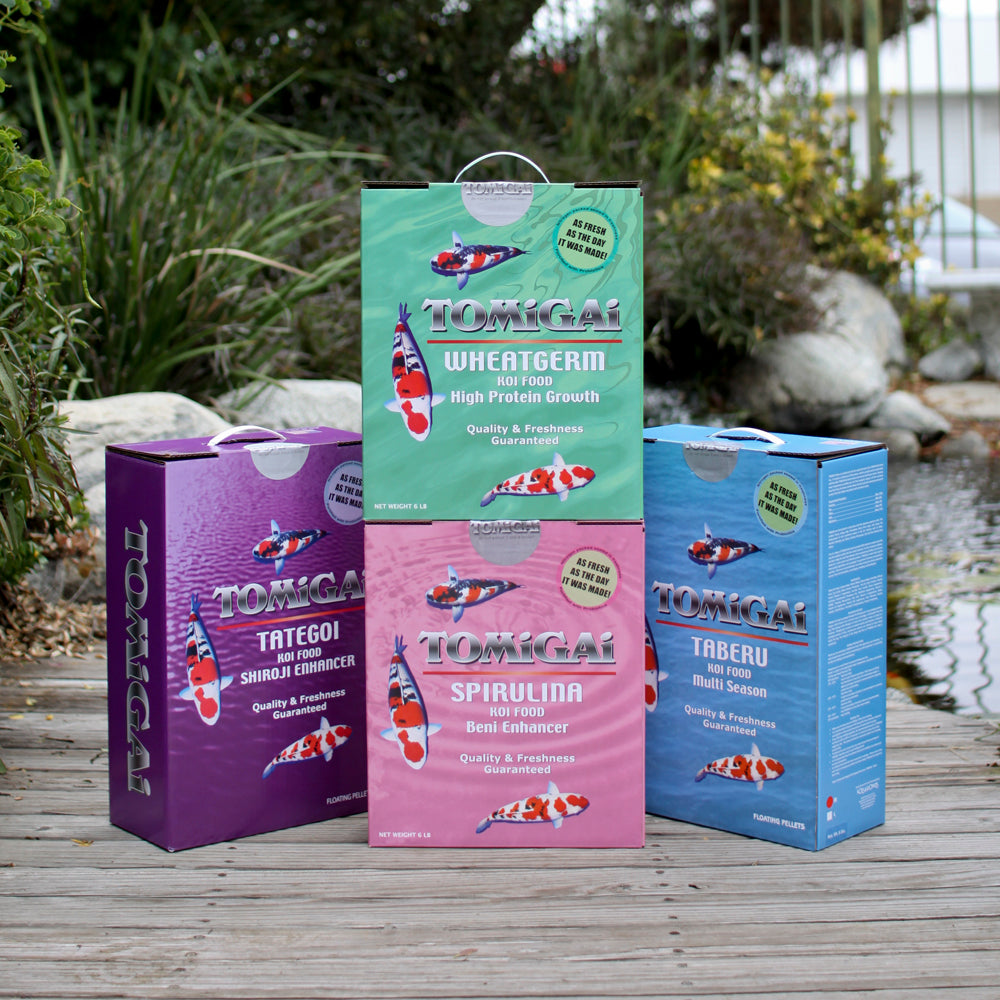
Shop color-enhancing koi food →
And make sure you're feeding to your water temperature.